
A Guide to Finishing Options for Aluminum 6061
Aluminum 6061 is the backbone of modern manufacturing. This guide explores the best Finishing Options for Aluminum 6061 to enhance your CNC parts.
You will learn about anodizing, powder coating, and chemical films. We provide technical data to help you choose the right surface treatment for your project.
Why Finishing Matters for Aluminum 6061 Parts?
Raw 6061 aluminum offers excellent strength-to-weight ratios. However, the "as-machined" surface often shows tool marks. Finishing removes these imperfections and improves aesthetics.
Corrosion resistance is another critical factor. Without protection, aluminum can oxidize in harsh environments. Proper finishing extends the lifespan of your industrial components.
Furthermore, finishing alters surface hardness and conductivity. Hardcoat anodizing increases wear resistance for moving parts. Chemical films maintain electrical paths for electronic enclosures.
Most Common 6061 Aluminum Surface Finish Options

Bead Blasting for Uniform Matte Texture
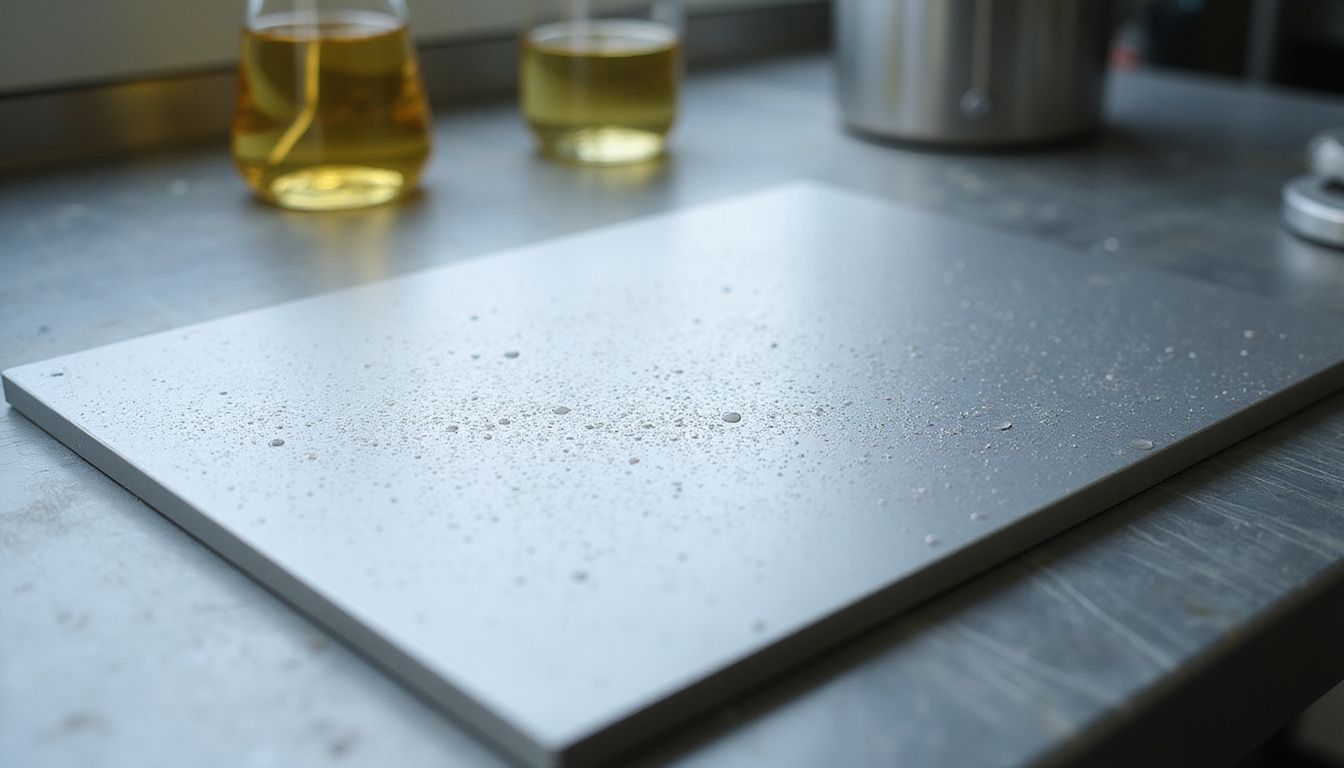
Bead blasting uses high-pressure glass beads. It creates a consistent, non-reflective matte finish. This process effectively hides CNC machining marks.
It is an ideal prep step for painting. The "satin" look is popular for consumer electronics. It provides a professional, high-end feel at a low cost.
Anodizing Types: Type II vs Type III Hardcoat
Anodizing is an electrochemical process. Type II (Sulfuric) is standard for color and corrosion. It creates an oxide layer roughly 5μm to 25μm thick.
Type III (Hardcoat) focuses on extreme durability. This layer can reach 50μm or more. It provides a Rockwell C hardness of 60 to 70.
Powder Coating for Superior Durability and Color
Powder coating applies a dry plastic powder. We bake the part to cure the finish. This creates a thick, impact-resistant layer.
It offers the widest range of colors. You can choose gloss, matte, or textured finishes. It is more durable than traditional liquid paint.
Chem Film (Chromate Conversion) for Conductivity
Chem film provides a thin protective coating. It meets MIL-DTL-5541 specifications. Unlike anodizing, it remains electrically conductive.
It is often used as a primer for paint. The finish is typically clear or iridescent gold. It provides excellent corrosion protection with minimal thickness change.
Comparing Anodizing vs Powder Coating for 6061
| Feature | Anodizing (Type II/III) | Powder Coating |
| Thickness | 5μm - 50μm+ | 50μm - 125μm |
| Hardness | Very High (Ceramic-like) | Medium (Polymer-based) |
| Conductivity | Insulative | Insulative |
| Color Range | Limited (Metallic) | Virtually Unlimited |
| Corrosion | Excellent | Very Good |
Anodizing preserves the metallic look. It is part of the metal itself. Powder coating sits on top like a shell. It is better for high-impact outdoor use.
How to Select the Best Aluminum 6061 Finish?

Consider your part's environment first. Will it face salt spray or chemicals? Anodizing or chem film is usually best for these cases.
Think about dimensional tolerances. Powder coating adds significant thickness. If your tolerances are tight, choose anodizing or bead blasting.
Finally, evaluate the aesthetic requirements. Do you need a specific brand color? Powder coating is your best bet for color matching.
Surface Finishing Tips for CNC Machined 6061
- Specify Ra Values: Tell your machinist the required surface roughness.
- Avoid Deep Scratches: Post-processing cannot always hide deep gouges.
- Mind the Holes: Anodizing can change the diameter of threaded holes.
- Sharp Edges: Round off edges to ensure even coating thickness.
Standard Machining’s Expert 6061 Finishing Services
At Standard Machining, we provide end-to-end manufacturing. We combine high-speed CNC milling with professional surface finishing. This ensures your parts arrive ready for assembly.
Our team understands the nuances of 6061 aluminum. We guarantee precision, quality, and fast turnaround times. Let us handle your next complex machining project.
Are you ready to start your next project? Contact Standard Machining today for a precision quote on machined and finished 6061 parts.
Conclusion
Choosing the right finish for 6061 aluminum optimizes performance. Whether you need industrial durability or sleek aesthetics, options abound. Focus on your application's specific environmental and tolerance needs.
FAQs: Aluminum 6061 Finishing Options
Does anodizing change the dimensions of my 6061 part?
Yes, anodizing grows the surface. Type II adds about half the coating thickness per side. Type III Hardcoat can change dimensions by 0.05mm or more.
Can I powder coat over an anodized surface?
It is possible but generally not recommended. Anodized surfaces are very smooth and hard. Powder adheres better to a grit-blasted or chem-filmed surface.
Which finish is best for heat dissipation?
Black anodizing is often used for heat sinks. It increases the surface area at a microscopic level. It also improves infrared emissivity compared to bare metal.
Is Aluminum 6061 good for clear anodizing?
Yes, 6061 is one of the best alloys for anodizing. It produces a very consistent and clean clear finish. It lacks the "smut" found in 2024 or 7075 alloys.
How long does a chem film finish last?
Chem film provides moderate corrosion resistance. In indoor environments, it lasts indefinitely. For outdoor use, it is often used as a primer.

Recent Posts

LET’S START WORK
TOGETHER
Please feel free to contact us. We will get back to you with 1-2 business days. Or just call us now.