
How Custom Heat Treatment Enhances the Fatigue Life of Drilling Tools
Drilling tools operate under extreme cyclic stress, where even minor structural weaknesses lead to catastrophic failure. Standard thermal processing often falls short in these high-stakes environments, making Custom Heat Treatment the most effective solution for extending tool longevity.
By tailoring the heating and cooling cycles to specific alloy compositions, machinists can significantly delay the onset of metal fatigue. This precision ensures your components withstand the harshest downhole conditions without cracking or losing their edge.
Understanding Fatigue Life in Drilling
What is Fatigue?
In the world of machining, fatigue is the "silent killer" of parts. It refers to the progressive and localized structural damage that occurs when a material is subjected to repeated loading and unloading. Even if the stress applied is well below the ultimate tensile strength of the metal, the constant vibration and rotation of a drill string create microscopic cracks. Over time, these cracks propagate until the tool snaps.
The Cost of Failure
For our clients in oil, gas, and mining, a tool failure isn't just about the cost of a new drill bit. It involves "fishing" operations to retrieve broken components from thousands of feet underground, rig downtime that can cost tens of thousands of dollars per hour, and potential damage to the wellbore itself. Improving fatigue life is directly tied to improving your bottom line.
Why Standard Treatments Fail
Many machine shops use "standard" heat treat recipes—generic cycles designed to hit a specific hardness number on a Rockwell scale. However, two tools can have the exact same hardness but completely different fatigue resistance. Standard treatments often ignore the specific residual stresses created during the CNC milling process, leaving the tool vulnerable to premature cracking.
The Core of Custom Heat Treatment
Beyond Surface Hardness
While hardness is important for wear resistance, a tool that is too hard becomes brittle. Custom Heat Treatment looks at the entire "recipe" of the metal. We focus on the relationship between hardness, toughness, and ductility. By customizing the process, we can ensure the core of the tool remains tough enough to absorb shocks while the exterior remains hard enough to cut through rock.
Material Selection and Chemistry
The effectiveness of any thermal process depends on the chemistry of the steel. Whether we are working with 4140 chromoly, 4340 nickel-chrome-moly, or S7 shock-resisting tool steel, each requires a unique temperature curve. Customization allows us to account for slight variations in "heat lots" from the steel mill, ensuring the final product meets exact performance standards.
Precision Control of the Environment
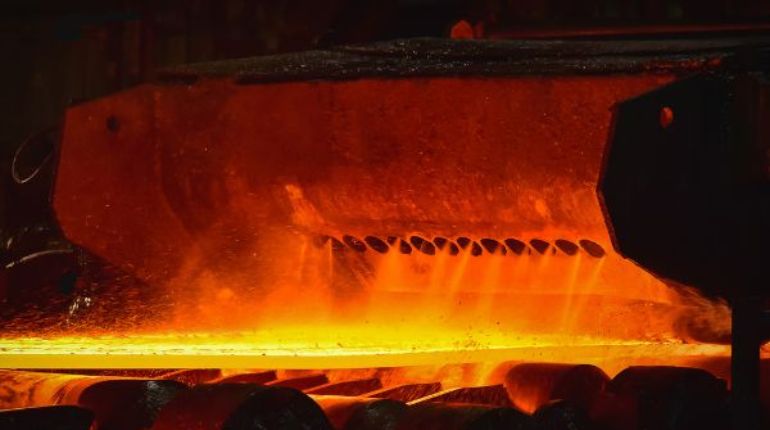
At Standard Machining, we know that what happens inside the furnace is as much about chemistry as it is about temperature. Custom cycles allow for precise control over the furnace atmosphere (to prevent decarburization or "skin" softness) and exact ramp rates to ensure the part reaches a uniform temperature without warping.
Key Processes That Drive Performance
Case Hardening vs. Through Hardening
Case hardening creates a hard, wear-resistant outer layer while maintaining a ductile core. This is ideal for parts like gears or drive shafts in a drilling assembly. Through hardening, conversely, ensures the entire cross-section of the tool has uniform strength. We help you choose the method based on where the highest stresses will occur during operation.
Quenching Techniques
Quenching is the rapid cooling of the metal to "lock in" the desired crystalline structure. A "standard" quench might use generic oil, but Custom Heat Treatment allows us to select the specific medium—oil, water, or polymer—and the agitation rate. This prevents the internal stresses that lead to "quench cracks," which are often invisible to the naked eye but fatal for fatigue life.
Tempering for Toughness
After hardening, steel is often too brittle for use. Tempering involves reheating the metal to a lower temperature to "relax" the structure and gain toughness. A custom tempering cycle might involve multiple "draws" (heating cycles) to ensure that the martensite structure is fully stabilized, which is a critical step for tools facing high-impact drilling.
Stress Relieving After Machining
CNC machining induces significant mechanical stress into a part. If you take a heavily machined part straight into a high-heat hardening cycle, it will likely warp or crack. Custom stress relieving involves a slow, controlled heating cycle prior to final hardening to "reset" the metal’s internal energy, leading to a much more stable and fatigue-resistant final product.
Microstructure: The Invisible Advantage
Martensite Transformation
The goal of most heat treatments for drilling tools is the creation of "tempered martensite." This is a needle-like crystalline structure that provides the best combination of strength and fatigue resistance. Through custom cooling rates, we maximize the percentage of martensite while minimizing "retained austenite," which is a softer phase of steel that can cause dimensional instability and soft spots.
Grain Refinement
When steel is held at high temperatures for too long, the "grains" (the microscopic crystals) grow larger. Larger grains make the steel weaker and more prone to fatigue. Custom Heat Treatment uses precise soak times to keep grains small and refined. Fine-grained steel acts as a barrier to crack propagation—if a microscopic crack starts, it has a harder time "jumping" across the grain boundaries in a refined structure.
Why "Custom" Matters for Your Project
Application-Specific Recipes
A drill bit used in the soft sands of a coastal region faces different challenges than one used in the hard granites of a mountain range. Customization allows us to adjust the tempering temperature by just a few degrees to prioritize either abrasion resistance or impact toughness, depending on the geology of your project.
Geometry Considerations
Drilling tools often have complex geometries—deep flutes, thin threads, and heavy bores. These different thicknesses heat up and cool down at different rates. A standard "one size fits all" cycle often results in thin sections becoming too brittle or heavy sections staying too soft. We customize the racking and the heating cycle to ensure uniform transformation across the entire geometry of the part.
The Benefits of a Precision Approach
Extended Tool Life: Parts last 2x to 5x longer than standard-treated components.
Reduced Vibration Failure: Better ductility means the tool can "dampen" harmonic vibrations better.
Cost Efficiency: While custom treatment has a higher upfront cost, the reduction in rig downtime provides a massive ROI.
Safety: Reducing tool breaks reduces the risk of dangerous "fishing" or recovery operations on the rig floor.
Conclusion
Maximizing the fatigue life of your equipment requires more than just high-quality steel; it demands a specialized approach to metallurgy. Custom Heat Treatment provides the essential balance of hardness and toughness needed to keep your operations running smoothly and efficiently.
At Standard Machining, we combine precision CNC manufacturing with expert thermal processing to deliver superior drilling tools. Contact our team today to discuss your project specifications and see how our custom solutions can reduce your downtime and replacement costs.

Recent Posts

LET’S START WORK
TOGETHER
Please feel free to contact us. We will get back to you with 1-2 business days. Or just call us now.